If you’re comparing soft washing vs pressure washing, the real difference is simpler than it sounds: one cleans with force, the other cleans with chemistry. For most home exteriors in Clarksville, soft washing is the better choice because it’s safer and the results usually last longer, but pressure washing still wins on concrete, brick, and other hard surfaces that need raw cleaning power.
Quick Overview of Soft Washing vs Pressure Washing
Here’s the plain-English version. Pressure washing uses strong water pressure to blast away dirt, grime, mud, and buildup. Soft washing uses low pressure plus cleaning solutions to break down and kill organic growth like algae, mold, and mildew, then rinses it away.
That force-versus-chemistry difference is what matters. If your surface is tough, pressure can work beautifully. If your surface is painted, older, porous, or easy to damage, soft washing is usually the smarter move.
How Each Cleaning Method Works
The jargon can make this sound more technical than it really is. PSI just means pounds per square inch, which is a way to measure water pressure. Higher PSI means a harder hit. Lower PSI means a gentler rinse.
How Pressure Washing Works
Pressure washing usually runs somewhere around 1,500 to 4,000 PSI. That’s enough force to strip off caked mud, surface grime, loose paint, gum, and years of buildup from hard materials.
Picture a concrete driveway after a wet Tennessee winter. Dirt gets packed in, tire marks settle, and pollen sticks to everything. Pressure washing attacks that mess directly. It doesn’t need much chemistry because the water pressure does the heavy lifting.
How Soft Washing Works
Soft washing usually works in the 100 to 500 PSI range, and for some house washing jobs it stays even lower. Instead of relying on impact, it uses cleaners to treat the surface first, giving the solution time to break down algae, mildew, mold, and bacteria before a gentle rinse.
That’s why soft washing makes so much sense on homes. In humid areas like Clarksville, where green buildup and pollen film show up fast, a house wash in Clarksville is often more about treating growth than blasting dirt.
Surface Safety and Risk of Damage
This is where the decision usually gets made. The wrong cleaning method can leave you with stripped paint, damaged siding, or water pushed where it should never go.
When Pressure Washing Is Safe
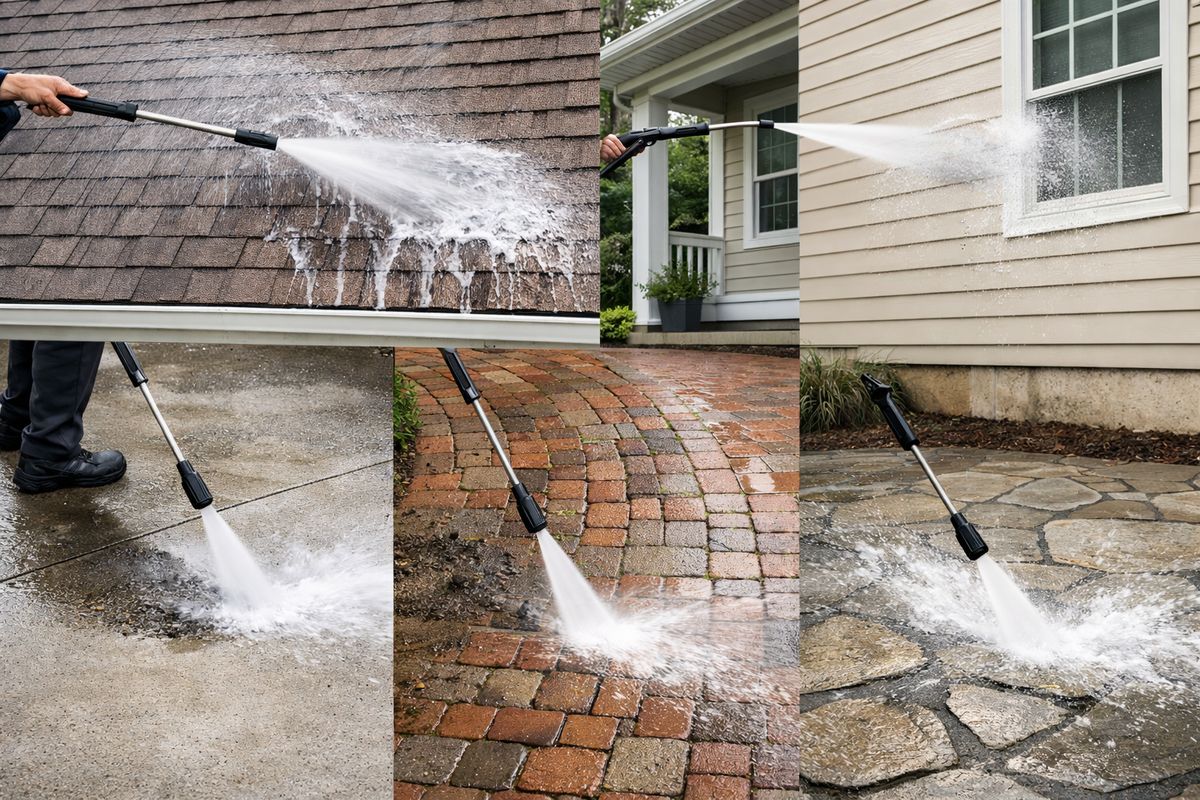
Pressure washing is safe on durable surfaces that can take the hit. Think concrete driveways, sidewalks, brick walls, stone patios, retaining walls, metal surfaces, and some commercial flatwork.
If you’ve got oil-stained concrete or a storefront walkway with months of foot traffic ground into it, pressure washing is often exactly the right tool. No need to baby concrete.
When Pressure Washing Can Cause Damage
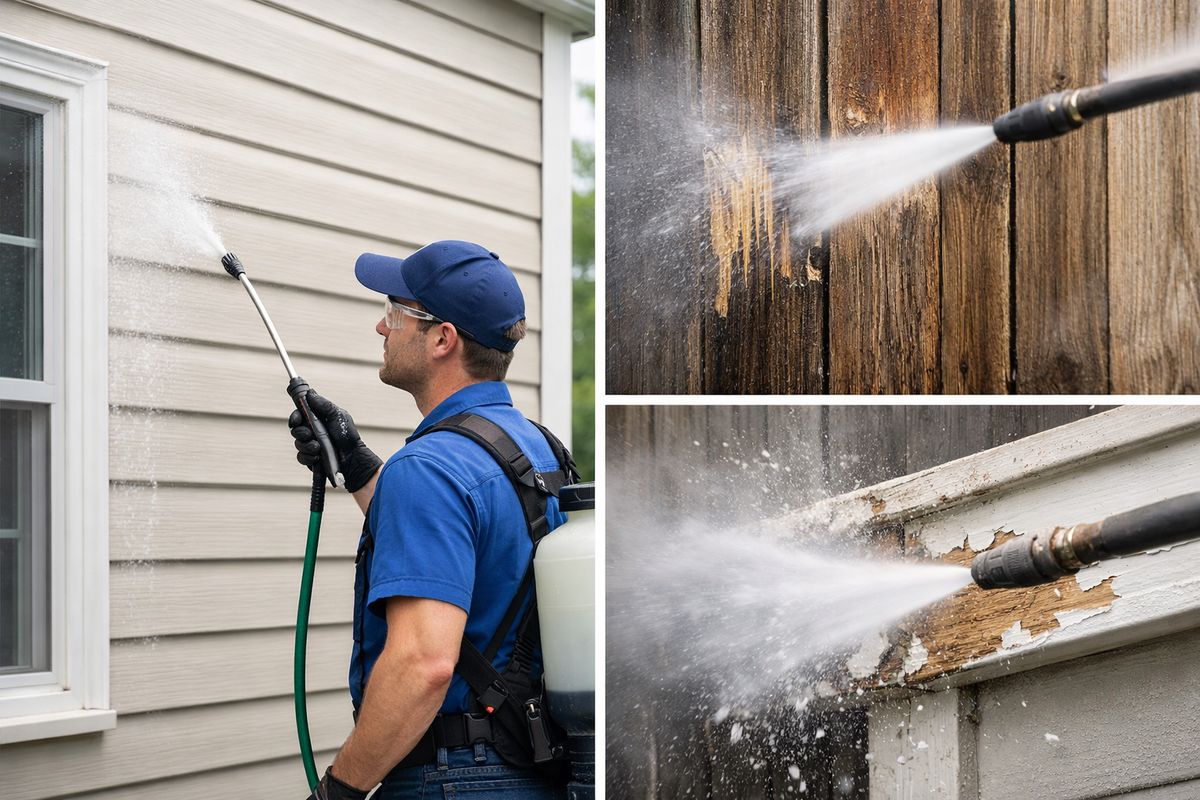
The catch is that pressure washing can go wrong fast. Too much force can chip paint, scar wood, leave oxidation marks on siding, etch softer surfaces, and even force water behind siding or trim. It can also damage window seals, which is one of those problems you don’t notice until later.
Roofs are the biggest no-go. High pressure can strip shingle granules and shorten roof life. That’s why pressure washing a roof is usually a bad idea, full stop.
Why Soft Washing Is Usually the Safer Choice for Delicate Surfaces
Soft washing is usually safer because it cleans without hitting the surface like a fire hose. That matters on vinyl siding, stucco, EIFS, painted wood, screens, awnings, and roofing materials. Research consistently shows lower-pressure cleaning is gentler on vulnerable surfaces, which is exactly why soft washing has become standard for so many exterior jobs.
If your goal is clean without surprise damage, soft washing has the edge.
Best Surfaces for Each Method
Most properties need both methods, just on different parts of the building.
Soft Washing: Roofs, Siding, Stucco, Painted Surfaces, and More
Soft washing shines on any surface that has organic growth or a finish you don’t want to disturb. That includes roofs, vinyl siding, painted trim, fences, stucco, screened enclosures, and awnings.
Middle Tennessee humidity makes this even more obvious. Shade, pollen, and moisture create that thin green or black film on siding and streaking on roofs. If that sounds familiar, you’ll probably want a gentler approach for siding instead of high pressure.
Pressure Washing: Concrete, Brick, Stone, Driveways, and Heavy-Duty Areas
Pressure washing is the better pick for hard surfaces where grime is stuck on and the material can handle force. Driveways, walkways, patios, brick, stone, loading areas, dumpster pads, and parking lots all fit here.
This is especially true for heavy traffic areas. If you’re dealing with mud, oil drips, gum, or deep surface grime, pressure washing usually gets faster, more visible results. If you want a closer look at what that job usually includes, what pros do on concrete surfaces helps set expectations.
Cleaning Power: Dirt, Stains, Algae, Mold, and Mildew
Not all dirty surfaces are dirty in the same way. That’s the trick.
Where Pressure Washing Wins
Pressure washing wins when the problem is physical buildup sitting on top of a hard surface. Mud. Loose debris. Surface dirt. Gum. Some grease. Heavy grime in high-traffic spots.
It’s direct and fast. On a sidewalk outside a busy storefront, that’s often exactly what you need.
Where Soft Washing Wins
Soft washing wins when the problem is living growth. Algae, mold, mildew, bacteria, and the stains they leave behind respond better to treatment than brute force. A soft wash doesn’t just remove what you see, it kills the source.
That’s why soft washing often keeps siding and roofs cleaner longer. Studies comparing the two methods show 12 to 18 months of cleaner results for soft washing versus a much shorter window for pressure washing alone.
How Long the Results Last
A surface can look clean right after either method. Staying clean is a different story.
Pressure Washing Results
Pressure washing gives you a quick visual payoff, especially on hard surfaces. But if you use it on algae-prone areas, regrowth can come back fairly soon. In humid, shaded spots, that clean look may fade in a few months.
That doesn’t make pressure washing bad. It just means it solves a different problem.
Soft Washing Results
Soft washing usually lasts longer because it kills spores and organic buildup at the root. On house exteriors, the clean can last 12 to 18 months, and sometimes longer depending on shade, moisture, and nearby trees.
That longer cycle is one reason many Clarksville homeowners checking how often exterior cleaning makes sense in Tennessee end up on a soft washing schedule for the house and a pressure washing schedule for the driveway.
Water Use, Chemicals, and Environmental Impact
Some people assume pressure washing is greener because it’s mostly water. Not always.
Pressure Washing and Water Use
Pressure washing often uses more water because it depends on volume and force to rinse contaminants away. On large flat surfaces, that can add up quickly.
For big concrete areas, that water use may still be worth it because pressure is the right tool. But it’s part of the tradeoff.
Soft Washing and Cleaning Solutions
Soft washing often uses less water, with some sources reporting 60 to 75 percent less, but it relies on cleaning solutions. That means mixing, dwell time, plant protection, and runoff control matter. Good soft washing uses biodegradable or EPA-conscious products whenever possible and takes care around landscaping.
That sounds fussy, but honestly, it’s just proper prep. And it’s one reason customers are asking more about water usage and runoff before booking exterior cleaning.
Pricing and Cost Value
The cheapest quote is not always the best deal. If the wrong method damages a surface or the clean fades in a few months, that lower price stops looking good pretty fast.
What Affects the Cost of Pressure Washing
Pressure washing cost usually depends on square footage, how dirty the surface is, how easy it is to access, and whether you’re cleaning standard residential concrete or larger commercial flatwork. Oil stains, gum, and heavy buildup can raise the price because they take more time.
If you want the numbers behind it, what homeowners usually end up paying gives a more detailed breakdown.
What Affects the Cost of Soft Washing
Soft washing prices are shaped by the surface itself, how much solution the job needs, dwell time, roof or ladder access, and prep work around plants, windows, and delicate finishes. It can take longer because the cleaning solution has to do its job before rinsing.
Which One Gives Better Long-Term Value
For most house exteriors, soft washing gives better long-term value because it protects the surface and lasts longer. For driveways, sidewalks, brick, and commercial flatwork, pressure washing is still the practical choice.
The simple rule is this: if damage risk is high, choose soft washing. If the surface is tough and the grime is stubborn, choose pressure washing.
Residential vs Commercial Use Cases
The best method changes with the property and the goal.
Best Choice for Homes
For homes, soft washing is usually the smarter choice for siding, roofs, painted trim, and pre-listing cleanup. It’s safer, better at removing organic growth, and more likely to leave the house looking fresh without collateral damage.
If you’re trying to make the place look better before photos or showings, cleaner exterior surfaces before listing can make a bigger difference than most small cosmetic projects.
Best Choice for Commercial Properties
Commercial properties often need both. Pressure washing makes sense for sidewalks, grease-prone pads, dumpster areas, and parking surfaces. Soft washing fits building exteriors, signage, awnings, and any finish that shouldn’t be hit with full pressure.
Best Choice Before Painting or Repairs
Before painting or repair work, contractors often use pressure washing on concrete and hard prep surfaces. But on siding, trim, stucco, or older painted materials, soft washing is usually safer because it lowers the risk of gouging, water intrusion, or coating failure.
When to Choose Soft Washing
Choose soft washing when you’re cleaning siding, roofing, stucco, painted wood, vinyl, screened areas, or anything with algae, mildew, or black streaking. It’s also the better choice when your property sits in shade, holds moisture, or deals with heavy pollen.
If your main concern is protecting the surface while getting a longer-lasting clean, soft washing is the answer.
When to Choose Pressure Washing
Choose pressure washing when the surface is concrete, brick, stone, metal, or another durable material, and the mess is stuck-on dirt, mud, grime, or traffic buildup. It’s also a strong fit for commercial walkways and driveways where speed and surface power matter most.
If brute force is exactly what the job calls for, pressure washing wins.
The Real Answer for Most Properties: Sometimes You Need Both
This is how many professional jobs actually work. Soft wash the house, roof, and trim. Pressure wash the driveway, walkway, patio, and retaining wall.
That combo gives you the best of both worlds. You protect delicate surfaces, hit hard surfaces properly, and avoid using one method where the other clearly fits better.
Verdict: Which One Wins?
Soft washing wins for most home exteriors because it’s safer and lasts longer. Pressure washing wins on concrete and other durable surfaces where force is the point.
So if you want one answer you can actually use, here it is: choose soft washing for the house, choose pressure washing for the hardscape, and don’t let anybody treat those two jobs like they’re the same thing. Try that rule first, and most of the confusion disappears.
Frequently Asked Questions
Is soft washing better than pressure washing?
For most siding, roofs, and painted exterior surfaces, yes. Soft washing is usually better because it cleans organic growth without the damage risk that comes with high pressure.
Can you pressure wash vinyl siding?
You can, but it’s easy to get wrong. Vinyl siding can be damaged or have water forced behind it if the pressure or angle is off, which is why soft washing is usually the safer choice.
Why does soft washing last longer?
Because it treats the cause, not just the symptom. Soft washing kills algae, mildew, mold, and spores instead of only blasting away the visible layer.
Is pressure washing cheaper?
Sometimes upfront, yes. But lower cost doesn’t always mean better value. If you need more frequent cleaning or damage happens, the cheaper job can cost more over time.
Do most properties need both methods?
A lot of them do. A typical home might need soft washing on the siding and roof, plus pressure washing on the driveway and sidewalks. That’s normal, not overkill.