Soft washing for siding is a low-pressure way to clean your home’s exterior without beating it up in the process. If your siding has that dull, green, streaky look after a humid Tennessee spring, this is usually the better fix, and it works for a simple reason: siding responds better to smart cleaning than brute force.
What Soft Washing for Siding Actually Means
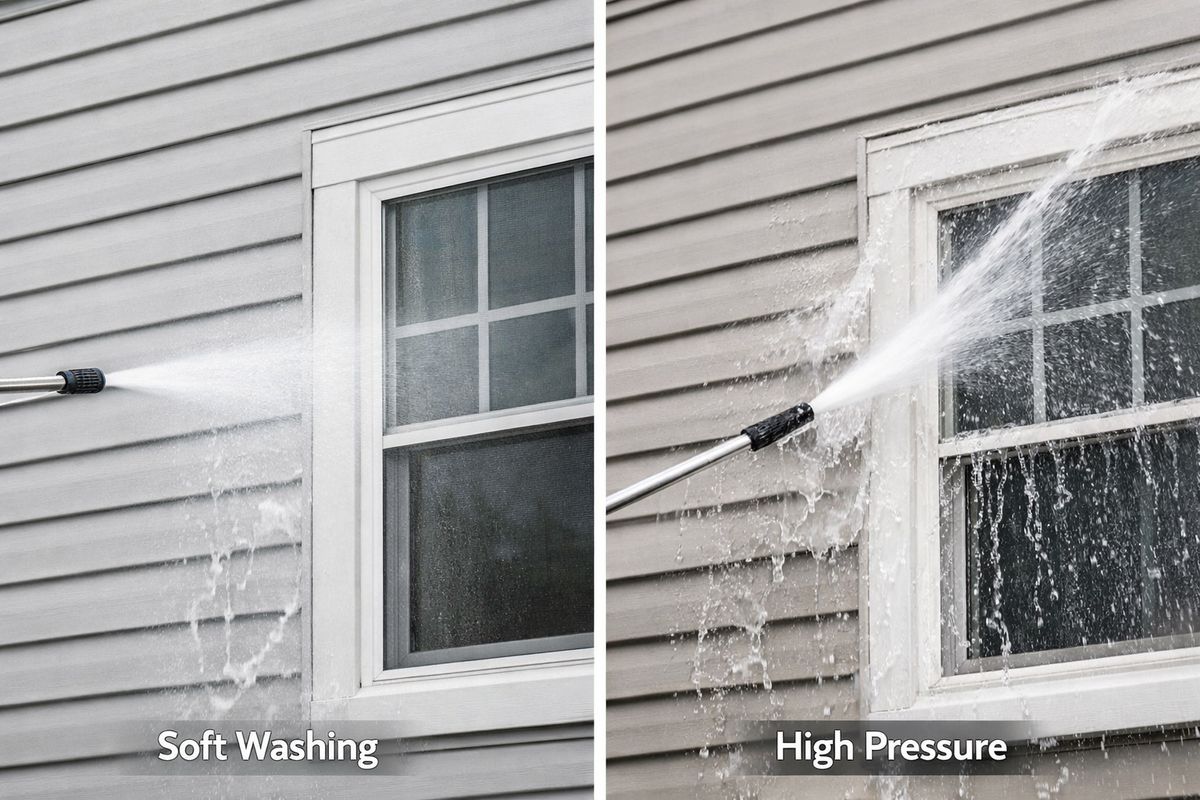
Soft washing for siding means cleaning with low water pressure, usually under 500 PSI, plus cleaning solutions that loosen and kill organic buildup. Instead of blasting grime off with force, you let the solution do most of the work and then rinse gently.
That distinction matters more than most people realize. Siding is not a driveway. It has seams, trim joints, caulk lines, painted surfaces, and window edges. On these materials, “more pressure” often means “more risk.”
Why Soft Washing Beats High Pressure on Most Siding
High pressure has a place, but siding usually is not it. Concrete can handle aggressive washing. Most siding should not.
The big advantage of soft washing is that it cleans algae, mildew, dirt film, and grime without driving water into places it should never go. A lot of exterior staining is organic, not just dusty, so real cleaning comes from treating the growth, not just knocking the top layer loose.
It Cleans Without Forcing Water Behind the Panels
Vinyl laps, trim gaps, old caulk, and window edges are the weak spots. Spray high-pressure water at the wrong angle and moisture can get behind the siding, where it lingers long after the dirt is gone. That can lead to warping, staining, and mold problems you do not notice right away.
That hidden damage is the catch. Your siding may look cleaner for a day while the real problem starts underneath. Even window seals can take a hit when the wrong pressure gets too close.
It Treats the Root of Green and Black Stains
Soft washing is chemical as much as mechanical. The cleaner is applied, given a few minutes to sit, and then rinsed away. That “dwell time” is just the short period where the solution stays on the surface and does the real work.
This matters for algae, mold, and mildew. A high-pressure blast may remove the visible layer, but about 15 minutes of dwell time helps kill what is causing the stain in the first place.
It’s Easier on Paint, Seals, and Older Materials
Paint can peel. Aluminum can dent. Wood can scar or fuzz up. Oxidized siding can end up with weird striped patches that look worse than the dirt.
If your home is older, freshly painted, or getting ready for listing photos, soft washing is the safer call. It gives you the clean look you want without turning a cleanup job into a repair bill.
Which Types of Siding Should Be Soft Washed
Material matters more than dirt level. Some surfaces look tough but still clean better with a gentler method.
Vinyl Siding
Vinyl is one of the clearest cases for soft washing. It flexes, has seams between panels, and can trap water behind those panels if sprayed too aggressively. Most contractors recommend a soft wash for vinyl for exactly that reason.
Wood and Painted Siding
Wood is porous, and painted wood is even trickier because you are trying to clean the surface without pulling the finish off with it. High pressure can peel loose paint fast, but it can also rough up the grain and leave the whole wall looking tired.
That is especially frustrating before painting. You wanted prep, not damage.
Stucco, Fiber Cement, and Composite Siding
These surfaces can fool you. Stucco and fiber cement look sturdy, but texture, edges, coatings, and hairline cracks all make them less forgiving than they seem. Low-pressure washing is usually the safer default because it cleans the surface without widening tiny flaws or etching the finish.
Aluminum, Brick, and Stone Veneer
Durable-looking does not mean damage-proof. Aluminum can dent and show oxidation. Brick and stone veneer have mortar joints that do not love concentrated force.
Soft washing is usually the smarter first move here too, unless the surface condition clearly calls for something else.
When High Pressure Still Has a Place
Pressure washing is not bad. It is just better matched to harder surfaces.
Best Uses for Pressure Washing
Driveways, sidewalks, some patios, and similar hardscape surfaces are where pressure shines. On concrete, force helps lift embedded grime, tire marks, and stuck-on debris with less risk of damage.
The simplest rule is the best one: concrete gets pressure, siding gets soft washing. Even professional house washing now keeps high pressure mostly for concrete flatwork, not siding.
The Hybrid Approach That Makes the Most Sense
A lot of properties need both methods on the same day. Soft wash the house, trim, and soffits. Pressure wash the driveway, walkway, and patio.
That approach makes sense if you are cleaning up before listing, freshening a storefront, or getting surfaces ready for paint. Each material gets the method that fits it.
Signs Your Siding Needs Soft Washing
Sometimes the need is obvious. Sometimes your house just looks a little tired and you cannot quite say why.
You See Green, Black, or Chalky Buildup
Green streaks, black spotting, pollen film, spiderweb residue, and chalky oxidation are common signs. In Clarksville, a house can look noticeably dingy by late spring because humidity and pollen stick around longer than you want. That is why Clarksville homes often need gentler exterior cleaning more regularly than expected.
Your Siding Looks Dull Before Listing or Painting
Cleaning is often the fastest curb-appeal upgrade you can make. Before photos, showings, repainting, or seasonal maintenance, washing the siding makes everything else look sharper.
Painters and real estate agents know this already. Clean first, then judge what really needs repair or paint.
How Soft Washing for Siding Works
The process sounds technical, but it is pretty simple once you see the sequence.
Apply, Let It Dwell, Then Rinse Gently
The cleaning solution goes on first. Then it sits briefly, usually around 15 minutes, so it can break down grime and kill organic growth. After that, the siding gets rinsed with low pressure.
Think of it like soaking a dirty pan before scrubbing it. The soak does most of the heavy lifting.
Why Surface Testing Matters
Some cleaners can react badly with certain paint colors or pigments. Testing a small hidden area first is smart, especially on painted siding, older finishes, or surfaces with unknown products underneath.
It is a small step, but it prevents big headaches.
Can You DIY Soft Washing or Is This a Pro Job?
You can handle some jobs yourself. But not every siding wash is a weekend project.
DIY Makes Sense When the Job Is Simple
If you have a one-story section of lightly dirty vinyl you can reach safely from the ground, DIY can work. The trick is using low pressure and the right cleaning mix, not trying to power through grime.
If you already own a pressure washer, the goal is not to crank it up. It is to use soft-wash style application and a gentle rinse.
Call a Pro When Height, Paint, or Heavy Growth Are Involved
Second-story work, heavy mildew, unknown materials, oxidation, or prep before painting all raise the stakes fast. So does any concern about forcing water behind panels.
Cost varies with height, buildup, and access, but many siding and house wash jobs land in the $250 to $800 range. Cheaper is not always better if the wrong method damages the surface.
Frequently Asked Questions
How Often Should You Soft Wash Siding?
Usually every 12 to 18 months works well. If your home gets lots of shade, tree cover, or moisture, annual washing may make more sense because algae returns faster.
Will Soft Washing Remove Mold and Algae?
Yes, if the right cleaning solution is used and left on long enough to work. That is exactly why soft washing often beats high pressure on green and black stains.
Does Soft Washing Cost More Than Pressure FWashing?
Sometimes, yes. It can take more time, more product, and a more careful approach. But that extra care is often what protects siding, paint, and seals from damage.
What Should You Try First?
Walk around the shaded side of your home and look closely at the siding. If you spot green film, black streaks, or that chalky, tired look, take that as your clue: the answer is probably soft washing, not more pressure.