Hiring pressure washing services sounds simple until you realize one wrong nozzle or too much pressure can do real damage. If you want cleaner concrete, brighter siding, and a house that looks cared for instead of tired, it helps to know what a professional job should actually look like before anyone starts spraying.
What Pressure Washing Services Actually Include
A good exterior cleaning job is not about blasting every surface with maximum force. It is about matching the cleaning method to the material, the level of buildup, and the condition of your property. That is the difference between a driveway that looks fresh by late afternoon and siding that ends up streaked or scarred.
In practice, pressure washing services can include concrete cleaning, house washing, deck and fence cleaning, storefront cleanup, parking area washing, gutter brightening, and prep work before painting or staining. In Clarksville, where humidity and pollen cling to everything for months, the method matters even more.
Pressure Washing vs. Soft Washing
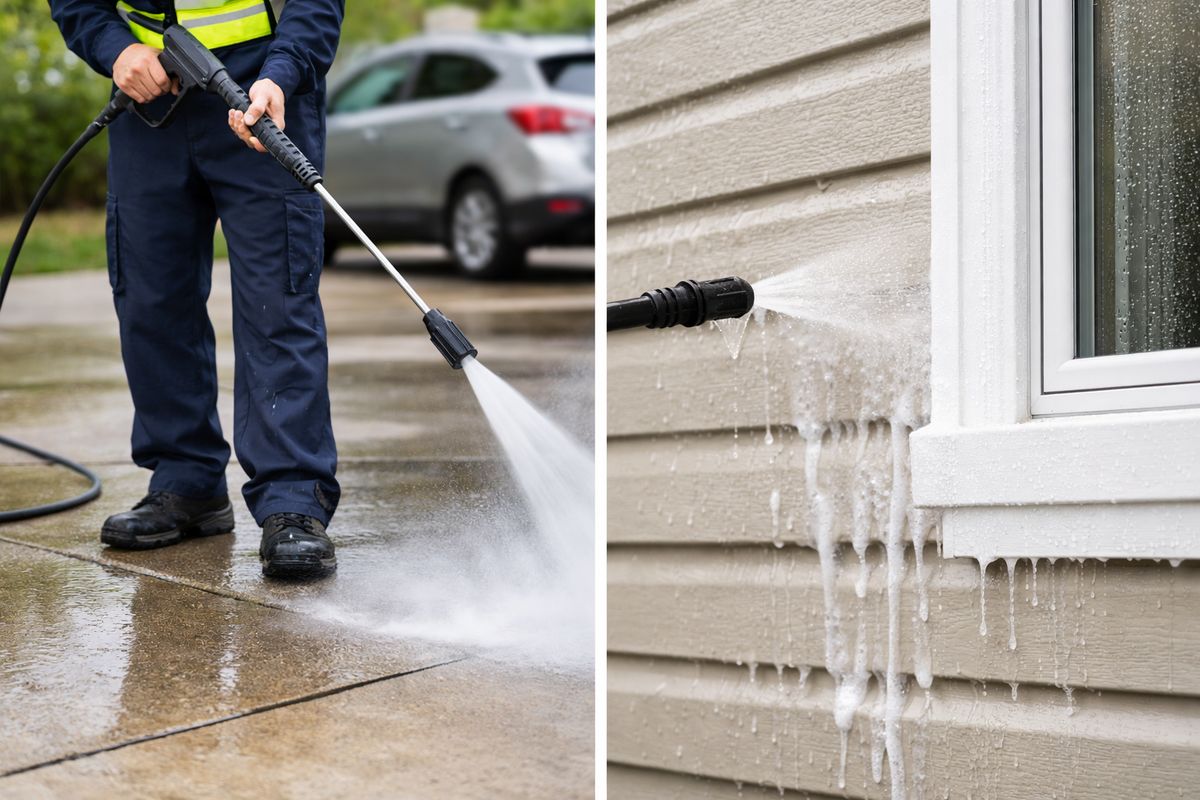
Pressure washing uses a stronger stream of water to remove grime from hard surfaces. It works best on concrete driveways, sidewalks, some stone surfaces, and other materials that can safely handle higher force.
Soft washing uses lower pressure plus cleaning solutions to break down algae, mildew, and organic stains. It is usually the smarter choice for siding, roofs, painted trim, and many fences and decks. If you want a deeper comparison, it helps to read about when lower-pressure cleaning makes more sense.
Here’s the thing: more pressure is not better. It is just more force. On the wrong surface, that force can strip paint, etch wood, loosen seals, and push water where it should not go.
Common Surfaces You Can Have Cleaned
Most residential and light commercial jobs focus on the surfaces that collect grime fastest and show it most clearly. Driveways, sidewalks, patios, decks, fences, siding, gutters, storefront walkways, and parking pads are all common candidates.
Pressure washing also shows up before painting and staining jobs. Clean surfaces help coatings stick better and last longer, which is why painters and contractors often want this step done first. For homes, local house washing options often include siding, trim, and other exterior materials that need a gentler approach than concrete.
What You Should Expect Before the Job Starts
The pre-job process tells you a lot about the company. If the estimate is rushed, vague, or based on a quick glance from the curb, that is usually not a good sign.
A Walkaround and Surface Check
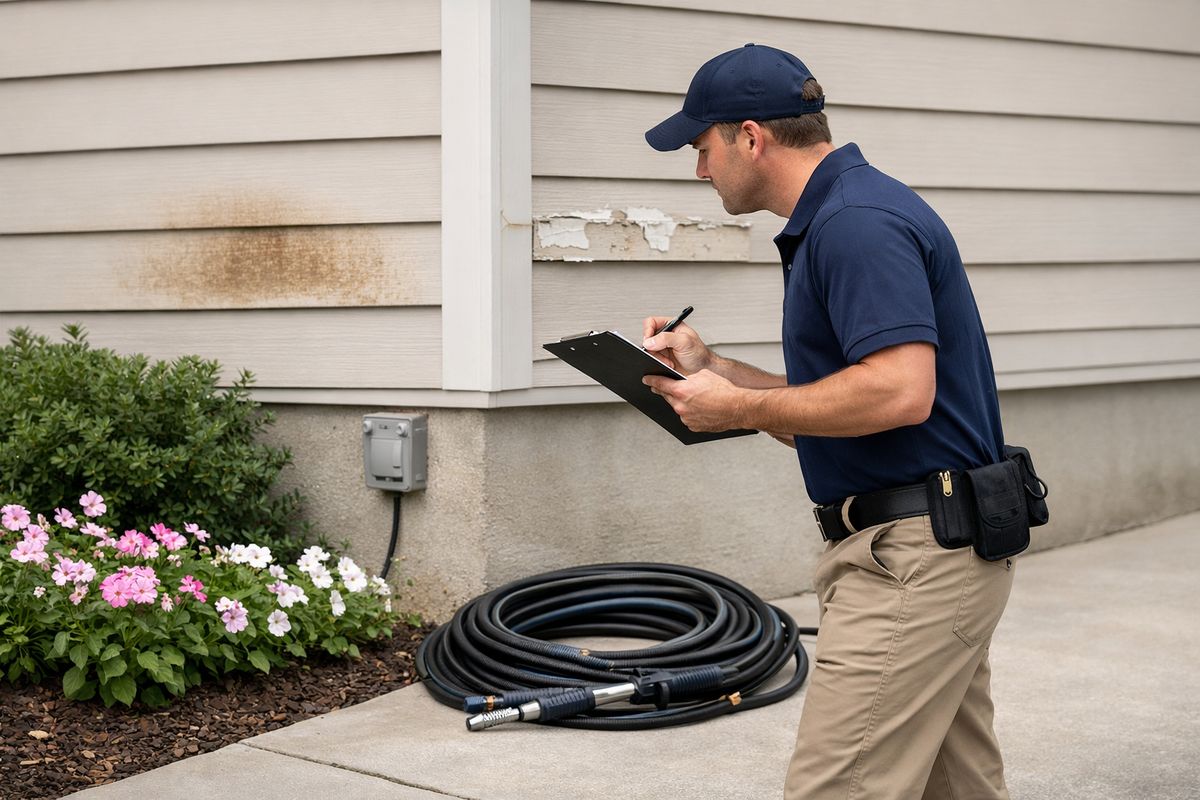
A quality provider should inspect the property before cleaning. That means looking for delicate materials, oxidation on siding, loose paint, cracked caulk, worn wood, heavy algae or mildew, and areas where runoff could become a problem.
This is also when trouble spots should be flagged. Existing damage matters. If a window seal is already weak or a board is already splintering, you should hear about it before the job starts, not after.
A Clear Quote and Scope of Work
Your quote should spell out what is being cleaned, what method will be used, whether detergents are included, how long the job should take, and what could cost extra. That level of detail is becoming a baseline expectation in a more competitive market, where better companies separate themselves with clearer systems and communication.
If you want a deeper look at pricing, what homeowners usually end up paying helps set realistic expectations before you compare estimates.
Prep Steps That Protect Your Home
Some prep is simple, but it matters. Outdoor furniture may need to be moved. Plants may need to be rinsed or protected. Outlets, door seals, and windows should be checked. Runoff should be planned, especially near flower beds and drains.
In Tennessee, this prep matters even more during humid months when mildew and pollen build up fast. A house can look dull almost overnight, like a thin yellow film settled on everything after a rough spring week.
How Professional Pressure Washing Should Be Done
On job day, careful work looks different from rushed work. You should see a method, not chaos.
The Right Method for Each Material
Concrete can usually handle higher pressure. Roofs, painted surfaces, vinyl siding, and many wood structures usually need less pressure or full soft washing. “Calibrated pressure” just means using only as much force as the surface can safely take, no more.
That sounds technical, but it is really common sense with the right equipment and experience. If you have siding concerns, cleaning exterior panels without causing damage is the standard to look for, not brute force.
Safe Cleaning Solutions and Runoff Control
Professional cleaning may involve detergents or specialty solutions, especially for algae, mildew, and organic staining. The catch is that those products should be used carefully, rinsed properly, and kept off sensitive landscaping as much as possible.
Good crews also pay attention to runoff. That means avoiding unnecessary flow into storm drains, preventing overspray onto nearby surfaces, and keeping surrounding areas under control instead of turning the whole job into a mess.
Visible Results Without Surface Damage
The standard is simple: cleaner surfaces without damage. You should see brighter siding, cleaner concrete, less staining, and fewer dark algae streaks. You should not see etched wood, chipped paint, broken seals, or zebra-striping across flat surfaces.
A good result is obvious. Think of a driveway that starts the day dingy gray-brown and looks noticeably brighter by late afternoon, without looking gouged or patchy.
How Much Pressure Washing Services Cost and Why Prices Vary
Prices vary because the work varies. A small sidewalk with light dirt is not the same job as a two-story house with mildew, shaded fencing, and a badly stained patio.
What Affects the Price
Size is the first factor, but not the only one. Surface type, severity of buildup, accessibility, water use, chemical needs, and job purpose all affect pricing. Paint-prep cleaning and post-storm cleanup usually cost more than routine maintenance because the work is slower and the stakes are higher.
Current industry data puts many residential jobs in the $275 to $425 range, though larger or more delicate projects can move beyond that.
When a Higher Quote Is Worth It
A higher quote can be worth it if it includes insurance, trained crews, soft washing knowledge, better equipment, and dependable scheduling. In a crowded field of 68,000 to 75,000 contractors, professionalism is a real differentiator.
Cheap bids often leave out the boring but important parts: surface testing, protection steps, written scope, and showing up when promised. Those are not extras. That is the job.
How to Choose a Pressure Washing Company Without Guessing
You do not need insider knowledge to spot a solid company. You just need to know what signals matter.
Signs You’re Hiring a Professional
Look for an insured business, clear communication, written estimates, realistic arrival windows, strong reviews, before-and-after photos, and a willingness to explain the plan. Marked vehicles and a consistent presentation help too. In a local service business, details like that usually reflect how the work is handled.
Questions to Ask Before You Book
Ask what method will be used, whether the crew has cleaned your surface before, how plants and nearby areas are protected, what happens if damage occurs, and whether the work is guaranteed. Those questions are not picky. They are basic.
If you are comparing local options, how to size up a crew before booking can help you separate polished marketing from real professionalism.
Red Flags and Common Mistakes to Avoid
Be careful with suspiciously low pricing, vague quotes, one-size-fits-all cleaning claims, no proof of insurance, and poor communication. Also, avoid anyone who talks about blasting roofs or siding with high pressure like that is a selling point. It is not.
Best Uses for Pressure Washing Services Around Your Property
The right service depends on why you need it.
Before Listing a Home or Boosting Curb Appeal
Pressure washing is one of the fastest visible upgrades before listing photos, showings, or open houses. Clean walkways, siding, patios, and driveways make the whole property feel better maintained. If selling is the goal, a quick exterior refresh before photos is often one of the easiest wins.
Seasonal Cleanup and Post-Storm Refresh
Spring pollen, summer patio prep, storm mud, and humid-weather mildew are common reasons to schedule service. In Middle Tennessee, mildew tends to come back like weeds in a flower bed, especially on shaded sides of the house.
Prep Before Painting, Staining, or Repairs
If you are painting, staining, or repairing exterior materials, washing first is the smart move. Dirt, chalky residue, mildew, and loose grime get in the way of adhesion, and that shortens the life of the finished work.
How Often You Should Schedule Service
There is no perfect universal schedule. Your property tells you more than any calendar can.
Typical Cleaning Schedules by Surface
Many homes benefit from exterior washing about every 12 to 18 months, especially in humid areas with algae and pollen buildup. Driveways and walkways may need attention sooner if they are heavily used or shaded. Storefronts and entry areas often need more frequent cleaning simply because foot traffic keeps them looking dirty faster.
One-Time Job vs. Recurring Maintenance
A one-time cleanup makes sense before listing a home, after a storm, or before a painting project. Recurring maintenance makes more sense for HOA requirements, storefronts, rentals, and homes with heavy shade or tree coverage.
If you want a more local benchmark, how often homes in Tennessee usually need washing gives a practical way to judge your own schedule.
Frequently Asked Questions
How long does a pressure washing job usually take?
Smaller jobs like a driveway or patio may take a couple of hours. A full house wash or larger multi-surface job can take most of the day, depending on buildup, access, and drying conditions.
Can pressure washing damage siding or wood?
Yes, if the wrong method is used. High pressure can scar wood, strip paint, and force water behind siding. That is why surface-specific cleaning matters so much.
Do you need to be home during the service?
Not always, as long as access, water, payment, and scope are clearly arranged ahead of time. Many jobs are completed without you being on-site, but communication should be clear before the crew arrives.
Is pressure washing worth it before selling a house?
Usually, yes. It is one of the quickest ways to improve curb appeal without taking on a full renovation. Clean exterior surfaces photograph better and make the property feel more cared for.
What is the best time of year to schedule service?
Spring through fall is the busiest stretch, but timing depends on buildup and weather. In humid areas, spring pollen and summer mildew often push exterior cleaning higher on the list.
A good pressure washing service should leave your property looking noticeably cleaner, not make you nervous about what got damaged along the way. Before you book, try one simple thing: ask exactly how your surfaces will be cleaned, and see how clearly the answer comes back.