Typing “pressure washing near me” sounds simple until the search results start looking identical. One crew promises the lowest price, another says “power washing” like it solves everything, and meanwhile your siding is yellow with pollen, your driveway has that dark Tennessee grime, or your place on a Clarksville cul-de-sac needs to look sharp before it hits the market.
Why “Pressure Washing Near Me” Isn’t Just About Who’s Closest
Local matters, but distance alone is not the point. The right crew is the one that knows how to clean your surface without damaging it, shows up when promised, and gives you a clear answer when you ask what method will be used.
That matters more than ever because this is a crowded service category. There are now 68,000 to 75,000 contractors active across the U.S., and many local markets are packed with solo operators and small crews. Some do excellent work. Some bought equipment last month and learned on YouTube.
So if your house is covered in spring pollen, your concrete is stained after a wet summer, or you need a storefront cleaned before weekend traffic picks up, your goal is not to find the nearest truck. Your goal is to find the crew that fits your job.
What a Good Pressure Washing Crew Actually Does
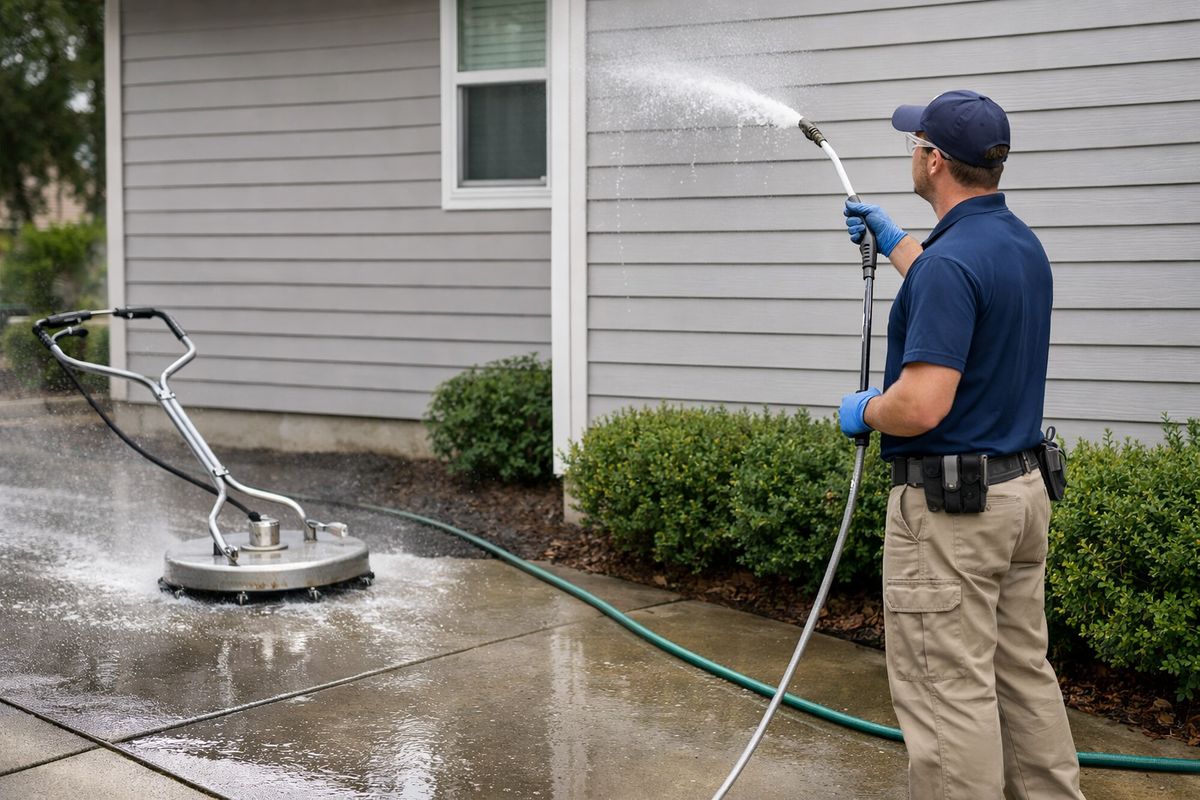
A good crew does not walk up to every surface and blast away. That is the fast way to scar wood, strip paint, force water behind siding, and turn a cleaning job into a repair bill.
The best crews adjust the process to your property. Pressure level, nozzle choice, cleaning solution, dwell time, rinse method, and runoff control should all change based on what is being cleaned. That sounds technical, but the idea is simple: concrete is not vinyl siding, and neither one should be treated like a roof.
Pressure Washing vs. Power Washing vs. Soft Washing
These terms get tossed around loosely, which is why so many homeowners end up confused.
Pressure washing usually means cleaning with pressurized water. Power washing often gets used the same way, though some people use it to mean heated water cleaning. Soft washing is different. It uses low pressure, often under 500 psi, plus cleaning solutions to break down algae, mildew, mold, and grime on more delicate surfaces.
In practice, soft washing is often the safer choice for siding, painted wood, and roofing. Higher pressure usually makes more sense for durable surfaces like concrete, stone, and some masonry. If you want a clearer breakdown of where each method fits, this guide on choosing between low-pressure cleaning and stronger washing methods lays it out in plain English.
Why Surface-Specific Cleaning Matters
Every exterior surface has a limit.
Vinyl siding can crack or let water get forced behind panels. Painted wood can peel. Deck boards can fuzz up or gouge. Brick can usually handle more force than siding, but old mortar joints may not. Concrete can take higher pressure, though even concrete can be etched if the operator gets sloppy or stays in one spot too long.
That is why a good crew should talk about your exact surface before talking price. If somebody says the same setup works for roofs, fences, sidewalks, driveways, and painted trim, that is not efficiency. That is a warning sign. In humid areas like Clarksville, where algae and pollen buildup are common, many companies rely on soft washing for most homes and reserve higher pressure for tougher concrete cleaning.
The First Things to Check Before You Book Anybody
Before you compare quotes, narrow the list. A few simple checks can save you from the cheapest mistake on the page.
Insurance, Licensing, and Basic Professionalism
Insurance comes first. If a hose damages siding, water gets where it should not, or somebody gets hurt on your property, you do not want vague answers about coverage after the fact. Ask for proof.
Licensing is a little different because rules vary by location. The trick is to verify what applies in your area and make sure the company operates like a real business, not a cash-only side hustle with a pickup and a Facebook page. A real estimate, clear contact info, a business name that matches the paperwork, and a professional follow-up all matter. Basic stuff, yes, but basic stuff tells you a lot.
Reviews, Photos, and Local Reputation
Star ratings help, but details matter more. Look for reviews that mention the kind of job you need done, such as house washing, driveway cleaning, deck prep, storefront maintenance, or post-storm cleanup.
You want specifics: did the crew show up on time, explain the process, protect plants, finish thoroughly, and communicate well if weather caused delays? Reviews influence a lot of buying decisions, and 62% of consumers said online reviews affected their choice in this category. Before-and-after photos help too, especially when the photos show surfaces similar to yours instead of random stock-looking shots.
Experience With Your Exact Job
Cleaning a restaurant walkway is not the same as washing a house exterior. Cleaning a deck before staining is not the same as removing algae from vinyl siding. And cleaning fleet vehicles is its own thing entirely.
Your best move is to look for proof that the crew has handled your exact surface and your exact goal before. If you need siding cleaned safely, it helps to understand how low-pressure washing protects exterior panels. If you need a surface prepped for paint or stain, ask whether the crew understands drying time, residue removal, and the difference between cleaning for looks and cleaning for adhesion.
Questions to Ask a Pressure Washing Company Before Saying Yes
This part should feel less like shopping and more like a short interview. A good company will answer clearly. A weak one will dance around the details.
“What Method Will You Use on My Surface?”
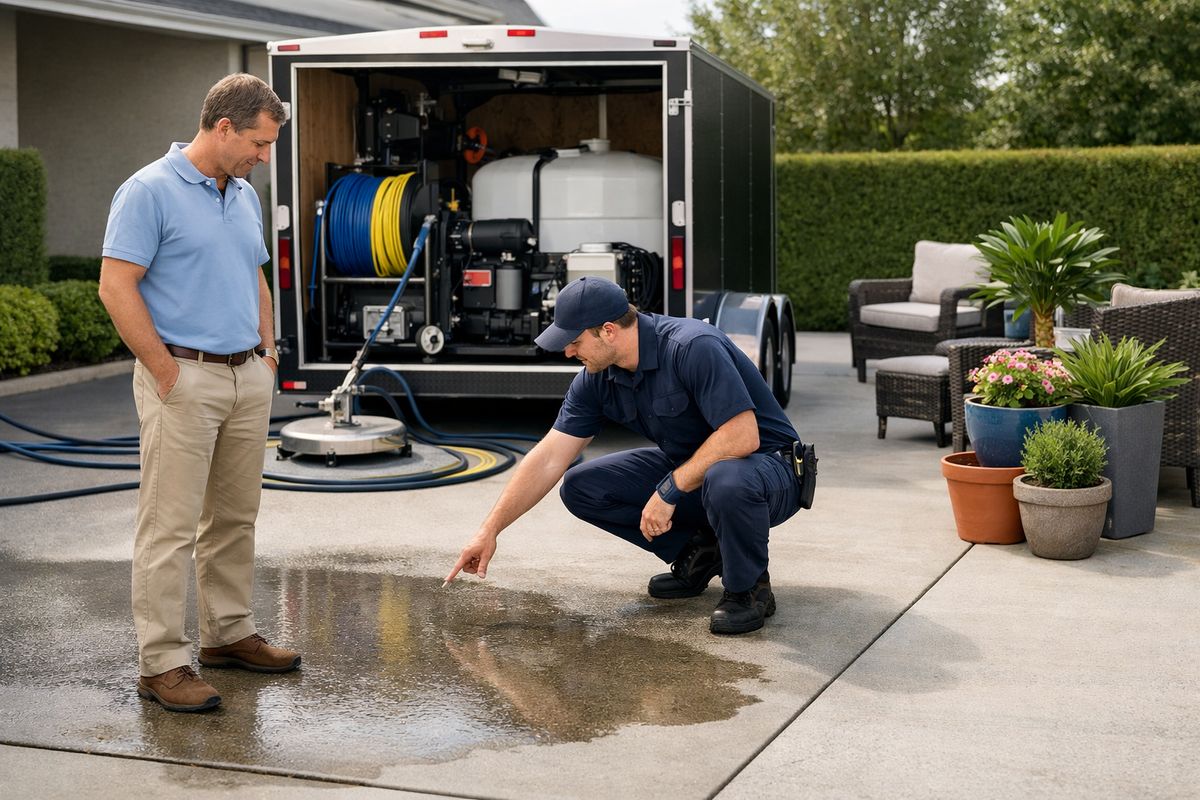
Ask for the plain-English version. How much pressure, what kind of nozzle, and whether soft washing is needed. You do not need a chemistry lesson, but you should get more than “don’t worry, we clean everything.”
A vague answer is a red flag. So is any company that acts as if higher pressure automatically means better results. For delicate materials, most pros recommend staying below 1,000 psi, and soft washing often stays far lower than that. Technique beats brute force every time.
“What’s Included in the Quote?”
Quotes should be specific. Does the price include detergent, mold or algae treatment, oil or rust treatment, moving light outdoor items, protecting plants, and cleanup after the work is done? If not, those “small extras” can stack up fast.
This is where written estimates earn their keep. If you want a better feel for how service scopes are usually laid out, this breakdown of what usually comes with an exterior wash helps you spot what is standard and what may cost extra.
“How Do You Handle Water, Chemicals, and Runoff?”
This question gets overlooked, but it matters. Dirty runoff can affect landscaping, drift into storm drains, or leave residue where pets walk. If your property has flower beds, decorative concrete, nearby vehicles, or a slope toward the street, the company should have a plan.
More customers are paying attention here too. In one survey, 72% of consumers preferred eco-friendly methods. That does not mean “chemical-free” magic. It means using the right cleaners in the right amounts, working efficiently, and taking runoff seriously.
“What Results Should You Expect , and What Won’t Come Off?”
A good company gives realistic expectations, not perfect-sounding promises. Mold, algae, dirt, and general grime usually respond well. Some rust stains, oxidation, battery acid discoloration, deep oil staining, and old ghost marks may lighten without disappearing fully.
That honesty matters. If your concrete has years-old oil spots or your siding has oxidation, no one should promise “brand new” results just to close the sale. Better to hear the truth upfront than get the hard sell and the soft excuse later.
How Pricing Works for Pressure Washing Near You
Price matters, of course. But price only tells you something useful when you know what is driving it.
What Changes the Price
Square footage is the obvious factor, but it is not the only one. Surface type changes labor and method. Heavy buildup takes more time than a light rinse. Second-story access can add complexity. So can steep grades, tight gate access, or a property with lots of obstacles to move around.
Special treatment also affects the number. Grease on a dumpster pad, algae on a shaded walkway, oxidation on siding, or storm-related mud and debris all require more than a quick spray. Some companies also price differently depending on whether they use your on-site water supply or need to bring extra equipment.
Cheap Quotes vs. Good Value
Here’s the thing: the cheapest quote can become the most expensive one in a hurry. If the crew misses half the buildup, etches your concrete, scars your deck, no-shows on the scheduled day, or leaves you with puddled runoff and dead plants, you did not save money. You bought a problem.
Lowball quotes often signal rushed work, underpowered equipment, no insurance, or a one-size-fits-all approach. Even industry guidance aimed at contractors warns against competing on price alone because customers reward reliability and professionalism. When you compare quotes, compare scope, method, communication, and proof, not just the number at the bottom.
When Bundled Services Make Sense
Bundling can be smart when the surfaces are close together and the setup overlaps. House plus driveway is a common one. Deck plus fence also makes sense, especially before outdoor season or before staining. For commercial properties, storefront plus sidewalk or entryway plus dumpster pad can save time and cut repeat setup costs.
The key is not to bundle just because a package exists. Bundle when the services match your timing and goals. If your deck needs prep for staining next week and your driveway can wait until fall, there is no prize for doing both now.
Choosing the Right Crew for Your Property Type
The best choice depends on what you need cleaned and why.
For Homeowners Boosting Curb Appeal
If your goal is curb appeal, focus on the surfaces people actually notice from the street: siding, driveway, porch, walkway, patio, garage area, and visible fencing. In Clarksville, that often means cleaning off pollen film in spring, mildew after humid stretches, and grime that builds up along shaded north-facing walls.
If you are preparing to sell, timing matters almost as much as cleaning. A fresh exterior can make listing photos look sharper and make in-person showings feel better before anybody steps inside. This guide on getting the outside of your home market-ready is useful if your main goal is appearance rather than heavy restoration.
For Commercial Properties and Storefronts
Commercial work is less about one big cleaning and more about consistency. Sidewalks, entryways, dumpster pads, drive-thru lanes, loading zones, and parking areas shape how customers see the property before they see the business.
Reliability matters most here. You want a crew that can work around opening hours, use proper caution signage, avoid disrupting traffic flow, and handle recurring maintenance without constant follow-up. A spotless storefront is nice. A clean entry that gets done on schedule, every time, is better.
For Contractors Prepping Surfaces for Paint or Stain
Prep washing is not cosmetic cleaning. The goal is to remove dirt, chalky residue, mildew, loose contamination, and anything else that could interfere with adhesion.
That means the washing method has to account for drying time and surface condition. Too aggressive, and you damage the substrate. Too light, and residue stays behind. If you are coordinating paint or stain work, get the timing nailed down before the wash happens. A clean surface that is still damp is not actually ready.
Mistakes People Make When Hiring a Local Pressure Washing Service
Most bad hiring decisions are predictable. Which is good news, because predictable mistakes are easy to avoid.
Picking Based on Price Alone
A low quote feels good for about five minutes. Then the shortcuts show up.
Maybe the crew rushes through the job. Maybe the house gets “washed” but the trim, soffits, and problem areas still look dirty. Maybe the operator uses one setting for everything because it is faster. That kind of cheap costs more later.
Assuming More PSI Means Better Cleaning
This one trips up a lot of people. More PSI sounds like more cleaning power, so it must be better, right? Not really.
The right pressure is the pressure that cleans the surface without harming it. That is the whole game. A driveway can handle far more force than painted wood or aging vinyl. The operator’s technique, distance, nozzle choice, detergent use, and patience matter more than a big PSI number on a machine.
Skipping the Fine Print on Timing and Prep
Small details cause a lot of frustration. Do you need to provide water access? Should vehicles be moved first? How long will the area need to dry? What happens if weather shifts? Do patio furniture, planters, or grills need to be cleared before arrival?
If those details are not discussed early, the job starts with confusion. And confusion is not usually the sign of a great service company.
A Simple Checklist You Can Use to Compare Local Companies
At some point, every company starts sounding polished. A simple checklist cuts through that fast.
Your 7-Point Pressure Washing Vetting List
Use this when comparing local options:
- Insured
- Experienced with your surface
- Clear method explained
- Detailed written quote
- Strong local reviews
- Realistic result expectations
- Clear scheduling and communication
That is enough to sort the serious professionals from the vague sales pitches.
Signs You’ve Found the Right Crew
The right crew answers questions without getting defensive. You get a straight explanation of whether your surface needs soft washing or higher pressure. Proof of insurance is easy to provide. The quote is written down. The schedule is clear. The conversation feels specific to your property, not copied and pasted.
That last part matters. One-size-fits-all pitches are for car washes and buffet trays. Exterior cleaning is more specific than that.
When to Book Pressure Washing in Clarksville and Similar Areas
In places with humidity, pollen, storms, and long warm seasons, timing shapes both results and availability.
Best Times for House, Driveway, Deck, and Commercial Cleaning
Spring is prime time for house washing because pollen sticks to everything and winter grime finally shows itself in full daylight. Early summer is great for patios, porches, and decks before outdoor gatherings start stacking up. Pre-listing cleanups also tend to bunch up in spring and early summer because curb appeal matters most when photos and showings are around the corner.
Driveways and sidewalks often make sense after pollen season or after a storm leaves mud, leaves, and dark organic staining behind. Commercial properties benefit from recurring schedules tied to foot traffic and appearance standards, not just one-time seasonal cleaning. If you are planning routine maintenance, this guide on how often Tennessee homes usually need exterior washing gives a practical baseline.
When You Should Book Sooner Rather Than Later
Some signs mean do not wait. Slippery algae on concrete is one. Dark streaks on siding are another. Heavy pollen film, mold spots, HOA notices, and any surface that needs to be cleaned before painting or staining all move the job up the list.
Spring and early summer slots can fill quickly, especially for reputable local crews. If your property already looks overdue, waiting for the “perfect time” usually just means more buildup and fewer appointment options.
Frequently Asked Questions
How much should you expect to pay for pressure washing near you?
It depends on the size of the area, the surface, the amount of buildup, and whether special treatment is needed for algae, oil, rust, or mildew. Residential jobs are often priced by surface or square footage, while commercial work may be quoted by scope and scheduling needs. A clear written quote matters more than chasing the lowest number.
Is pressure washing safe for vinyl siding?
Yes, when the method matches the material. Vinyl siding is often better cleaned with soft washing or controlled low-pressure washing rather than aggressive blasting. The danger is not the act of cleaning, it is using the wrong pressure or poor technique.
How long does a pressure washing job usually take?
Small jobs like a front walk or patio may take an hour or two. Full house washing, driveway cleaning, or multi-surface jobs can take several hours. Heavier buildup, taller structures, and prep or protection steps will add time, which is usually a good sign rather than a bad one.
Do you need to be home during the service?
Not always, but access and expectations should be handled in advance. The company may need water access, gate access, or a quick walkthrough before starting. If delicate plants, pets, vehicles, or outdoor furniture are involved, those details should be settled before the appointment.
Will pressure washing remove all stains completely?
No company should promise that. Dirt, mildew, algae, and general grime often come off well. Rust, oxidation, deep oil stains, and old discoloration may improve a lot without disappearing completely. Honest expectations are part of a good quote.
Is it better to book before listing a home or before painting?
Usually yes. Before listing, exterior cleaning can improve photos, curb appeal, and first impressions. Before painting or staining, cleaning removes residue that can affect adhesion. The only catch is timing, because surfaces need enough drying time before the next step happens.
A good pressure washing company should make you feel informed, not sold to. Try one simple thing before booking: ask exactly how your surface will be cleaned, and pay close attention to how clear the answer is.