If you live in Tennessee, you’ve seen it: yellow pollen glued to the siding in spring, then green buildup creeping up the shady side by late summer. If you’re wondering how often to pressure wash house exteriors in this climate, the short answer is simple: once a year is right for most homes, and twice a year makes sense when moisture, shade, or grime keep coming back.
You’ll get the best results when you treat house washing like basic maintenance, not a last-minute rescue job. Below, you’ll get the rule of thumb, the Tennessee-specific reasons behind it, the best seasons to schedule it, and how to tell whether your house needs pressure washing or soft washing instead.
How often should you pressure wash a house in Tennessee, really?
For most Tennessee homes, annual washing is the baseline. That single yearly cleaning helps remove pollen, dirt, mildew, and organic grime before it settles in and starts staining.
But Tennessee is not a clean-and-dry climate. In places like Clarksville, long humid stretches, frequent rain, and shady lots can make siding stay damp for days. If your house sits under trees, faces north, or keeps growing green streaks no matter what, twice a year is usually the smarter schedule.
The simple rule of thumb for Tennessee homes
Here’s the practical version. Start with once a year. Then move to twice a year if your property holds moisture, collects debris, or shows visible algae and mildew before the year is up.
That matches the broad guidance from once per year recommendations, with more frequent cleaning for homes exposed to heavier precipitation and buildup. In Tennessee, that higher-exposure category is pretty common.
Once a year is right for most houses
A yearly wash handles the usual cycle of pollen, summer grime, fall debris, and winter residue. It keeps siding looking brighter, helps preserve curb appeal, and removes the stuff that slowly wears surfaces down.
It also keeps the job easier. When dirt and mildew sit for too long, stains get more stubborn and cleaning gets more aggressive. That is one reason regular maintenance usually beats waiting until the house looks obviously dirty.
Twice a year makes sense in higher-moisture or higher-mess spots
Some homes need more help. If your lot has heavy tree cover, if one side of the house barely gets sun, or if your siding faces a busy road, buildup comes faster than you expect. The same goes for houses with recurring black spots under gutters or green film along the lower walls.
In those cases, a spring wash and an early fall wash usually keep things under control. That pattern works especially well in Tennessee, where moisture and pollen tag-team your exterior for most of the year.
More often isn’t always better
More cleaning does not automatically mean better care. If the wrong method gets used too often, paint can wear early, trim can get damaged, and water can get pushed behind siding.
That’s why “pressure washing” is often used as a catch-all term, even though many houses should actually be soft washed. If you want a clearer breakdown, this guide on when low-pressure cleaning is the better choice explains where high pressure stops helping and starts causing problems.
Why Tennessee homes get dirty faster than you expect
Tennessee makes exteriors dirty in layers. Not all at once, which is why the problem sneaks up on you.
Humidity, rain, and shade feed mold, mildew, and algae
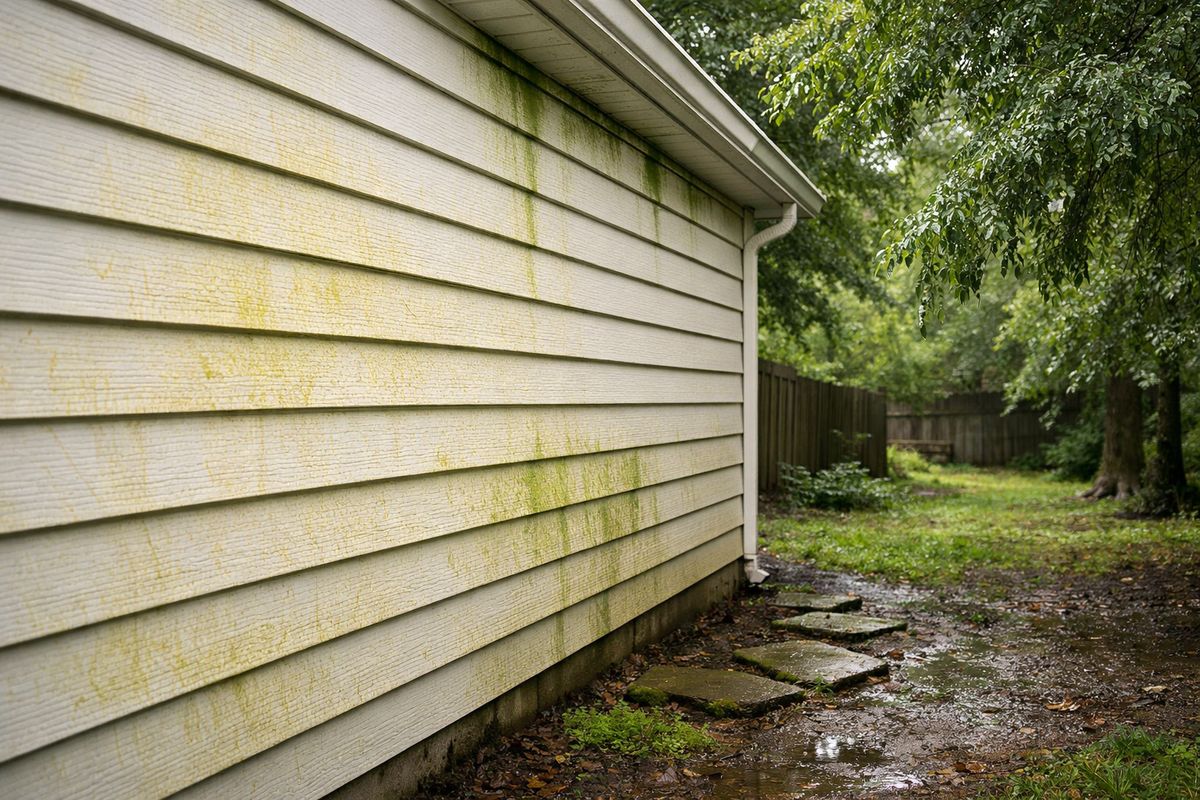
Middle Tennessee humidity gives mold, mildew, and algae exactly what they want: moisture that hangs around. Add tree shade and limited airflow, and your siding becomes the damp corner of the bathroom that never quite dries out.
North-facing walls are usually the first giveaway. You’ll notice faint green haze, dark streaks, or blotchy patches near trim lines. Left alone, those stains get harder to remove and make the whole house look older than it is.
Spring pollen and summer dust leave a film behind
Spring is obvious. Your car turns yellow overnight, and your house does too. The catch is that pollen does not just sit on the surface. It mixes with humidity, storm residue, and dust, then sticks.
By summer, you’re dealing with a dull film instead of bright siding. Rain helps a little, but not enough. Once grime bonds to the surface, a garden hose won’t do much besides make it wet.
HOA standards, curb appeal, and pre-sale cleanup
Sometimes frequency has less to do with biology and more to do with appearance. If your neighborhood has HOA standards, a dingy exterior gets noticed fast. If you’re selling, it matters even more. Clean siding, trim, and walkways can make listing photos look sharper and the house feel better cared for.
If your goal is appearance as much as maintenance, a yearly wash is the minimum. Before listing or hosting, cleaning is often the fastest visible upgrade, especially when paired with other appearance-focused exterior cleanup.
The best time of year to pressure wash in Tennessee
Timing matters more than most people think. A good cleaning window makes the job safer, easier, and more effective.
Spring is the most popular window
Spring is the obvious choice for a reason. It clears away winter grime, tackles heavy pollen, and gets your home looking clean before landscaping, backyard season, and real estate photos kick in.
It also tends to line up with the best washing conditions. Spring and early fall are widely recommended because mild, dry weather helps surfaces clean and dry properly.
Early fall is the other smart option
If spring is your first choice, early fall is the backup that often works just as well. It clears off summer buildup before colder weather, wet leaves, and longer damp stretches show up.
For homes that need two cleanings a year, spring and early fall are the sweet spot. That spacing keeps buildup from getting too far ahead of you.
When to wait instead of wash
Skip freezing weather, stormy days, and extremely hot afternoons. You also want to avoid washing when surfaces stay wet for too long or when direct sun makes cleaning solutions dry too fast.
A good target is dry weather with moderate temperatures. One source recommends about 40 to 75 degrees, which lines up well with Tennessee spring and fall.
Your siding and surface type change the answer
Not every house should be cleaned the same way. That part matters a lot.
Vinyl, fiber cement, and brick all need a different approach
Vinyl siding usually does well on a once-a-year schedule, though shaded or dirty homes may need two visits. Fiber cement can also handle regular cleaning, but technique still matters. Brick is durable, but aggressive washing can damage mortar joints if the pressure is too high.
If you have vinyl and want the details, this breakdown of cleaning vinyl without leaving damage behind covers the common mistakes people make.
Painted siding, stucco, and older exteriors usually need soft washing
Soft washing means lower water pressure paired with a cleaning solution that breaks down algae, mildew, and grime. For painted siding, stucco, and older exterior materials, that’s usually the safer choice.
That’s not just preference. The industry has shifted hard in that direction because soft washing is preferred for many surfaces that can be damaged by high pressure.
Roofs, decks, driveways, and fences run on their own schedule
Your house may only need annual washing, but that does not mean every surface follows the same calendar. Driveways, patios, decks, and fences usually collect mess faster because they deal with foot traffic, splash-back, leaves, and standing moisture.
That’s why a house can look fine while the concrete still looks rough. In many cases, the siding waits a year while flat surfaces need seasonal attention.
Signs your house is ready for a wash now
Sometimes the calendar helps. Sometimes a five-minute walk around the property tells you everything.
Green streaks, black spots, and spider webs
These are the obvious signs. Green film usually means algae. Black spotting often points to mildew or mold. Spider webs around eaves and entry corners trap dust and make the whole exterior look neglected fast.
If you see those signs on more than one side of the house, waiting longer usually does not improve anything.
Dingy siding, muddy splash marks, and pollen that won’t rinse off
Not all buildup looks dramatic. Sometimes the house just looks tired. Lower siding panels get muddy splash marks. Gutters leave streaks. Pollen sticks even after rain.
That dull look is your signal that surface grime has built up enough to need more than weather and a hose.
You’re painting, selling, or hosting soon
This is the easy one. If you’re painting, cleaning comes first. If you’re listing the house, cleaning comes first. If you’re hosting a graduation party in two weeks and everyone will walk past the front entry, yes, cleaning still comes first.
For homes being prepped for sale or routine maintenance, a local house exterior cleaning service in Clarksville can usually tell pretty quickly whether you need a full wash or just targeted cleanup.
Pressure washing vs. soft washing: what your house actually needs
A lot of people use these terms like they mean the same thing. They don’t.
Pressure washing uses force
Traditional pressure washing relies on strong water pressure to blast away dirt and stains. It works best on durable surfaces like concrete, some stone, and certain hardscape areas.
That force is useful, but only where the surface can handle it. On the wrong material, it turns cleaning into repair.
Soft washing uses lower pressure plus cleaning solution
Soft washing uses much lower pressure and does the heavy lifting with cleaning agents instead. For siding, trim, stucco, and roofs, that is often the better method because it removes organic growth without beating up the surface.
If you want the side-by-side version, this explanation of which method fits which surface makes the choice much easier.
The wrong method can cost more than the cleaning
High pressure can etch surfaces, lift paint, scar wood, break seals, and push water behind siding. Even brick is not always safe if mortar is aging or already cracked.
That is the expensive part people forget. Cleaning is supposed to prevent damage, not create it.
DIY or hire a pro?
This depends on the surface, the height, and your comfort level. For houses, the answer is usually less exciting than people hope.
DIY works for small, low-risk jobs
If you’re rinsing a small patio or cleaning a short stretch of sturdy concrete, DIY can be fine. Lower-risk surfaces at ground level are where homeowner equipment makes the most sense.
The trick is knowing when to stop. A machine from the rental counter can do real damage fast if you treat siding like a driveway.
A pro is usually the safer move for houses
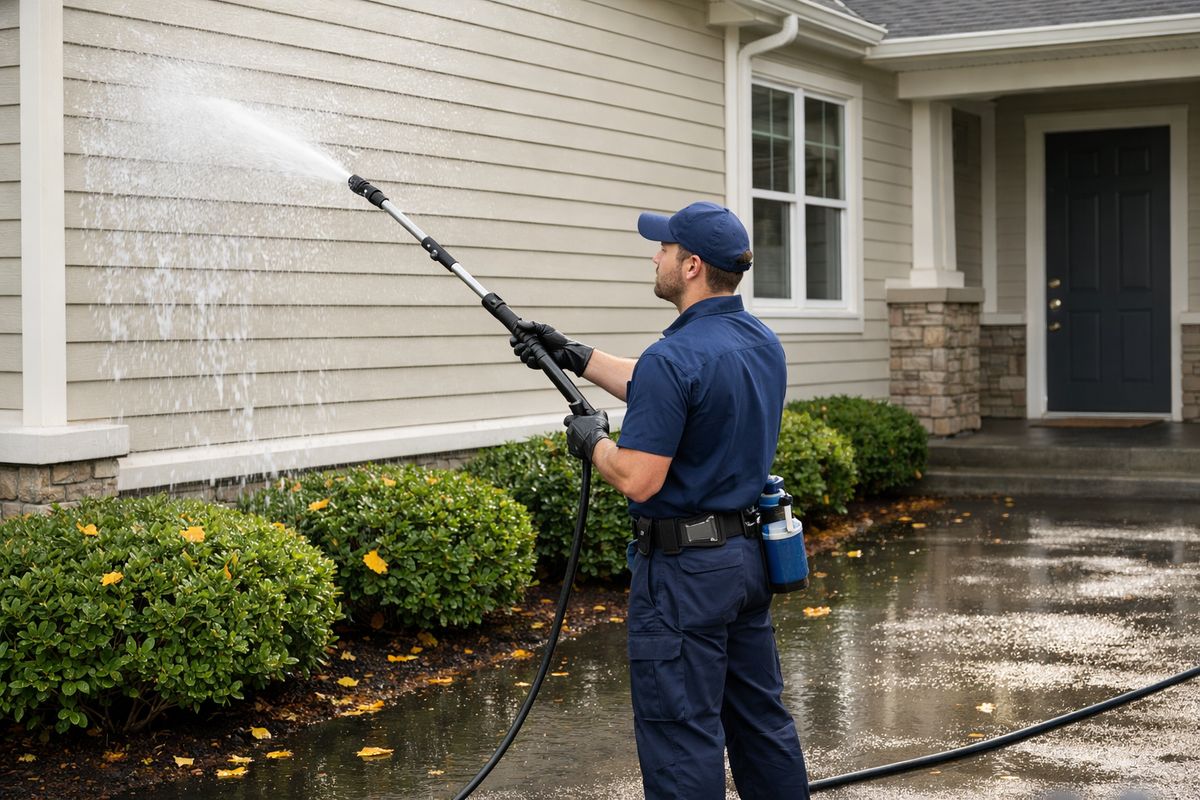
Houses are different. Height changes the risk. Siding materials change the method. Detergents, nozzle choice, water flow, and drying conditions all matter. That’s why pros usually make more sense for full exterior cleaning, especially on multi-story homes or painted surfaces.
If you’re comparing companies, this guide to choosing a crew without guessing helps you spot experience, insurance, and service quality faster.
What professional service usually costs
For a standard house wash, you’ll usually see prices somewhere between $150 and $1,400, with larger homes or more difficult jobs running higher. Many typical residential visits land around $250 to $500, while size, height, access, and extra surfaces can push the total up.
A quick schedule by property type
The right schedule changes when the property type changes.
Single-family homes in Clarksville and surrounding areas
For most homes, yearly washing is the right starting point. If your lot is shaded, packed with trees, or prone to mildew, move to twice a year, usually spring and early fall.
Commercial buildings, storefronts, and mixed-use properties
Business properties often need more frequent cleaning because sidewalks, entrances, and windows show grime quickly. Appearance affects foot traffic, customer trust, and how maintained the property feels from the curb.
HOAs, rentals, and larger managed properties
Managed properties usually need recurring service, not one annual cleanup. Dumpster areas may need monthly attention, common walkways and pool decks often make sense quarterly, building exteriors and parking areas are commonly cleaned twice a year, and some entry features can stay on an annual cycle. The point is simple: shared spaces get dirty faster because more people use them.
How to set the right washing schedule for your property
You do not need a complicated plan. You just need a baseline and a quick reality check after each season.
Start with a once-a-year baseline
If your home has average sun exposure, no major staining issues, and no thick tree canopy, once a year is the right default. Put it on the calendar in spring or early fall and treat it like gutter cleaning or HVAC maintenance.
Adjust based on what you notice after each season
If green buildup returns before the year is over, or if pollen and grime cling to the siding for months, switch to twice yearly. You’re not overdoing it. You’re matching the schedule to the property.
Try one easy walk-around this week
Take ten minutes and check the shady side of the house, the trim under gutters, the lower siding near mulch beds, and the path to your front door. If you see green, black, yellow, or just plain dingy surfaces, your answer is probably right there: spring wash, fall wash, or both.
Frequently Asked Questions
Is once a year enough for most Tennessee houses?
Yes. For most homes, once a year is enough to stay ahead of pollen, grime, and light mildew. If your house stays damp, shaded, or dirty for long stretches, twice a year is usually better.
What month is best to wash a house in Tennessee?
Spring is the most popular choice, especially after pollen season starts showing up on siding. Early fall is also a great window because temperatures are milder and summer buildup is easier to clear before cooler weather sets in.
Should you pressure wash a painted house?
Usually, painted exteriors are better off with soft washing instead of high pressure. Lower pressure helps clean the surface without stripping paint, forcing in water, or leaving streaks.
Can you pressure wash a house too often?
Yes. Over-washing, especially with too much pressure, can wear paint, damage trim, and shorten the life of some exterior materials. Frequency matters, but method matters just as much.
How do you know your house needs washing now?
Look for green streaks, black spots, spider webs, muddy splash marks, dull siding, and pollen that sticks after rain. If you’re painting, selling, or hosting soon, that is also a good reason to clean now instead of later.