A house washing service sounds simple until you get the quote and realize “house wash” can mean anything from a basic siding rinse to a much more complete exterior cleanup. If you want clean walls, brighter trim, fewer surprises, and a quote that actually matches the job, the trick is knowing what usually comes with the service and what quietly shows up as an extra.
What a House Washing Service Usually Includes
Most companies use “house washing service” as a broad label, not a fixed package. That is exactly why this section matters. Before you assume gutters, windows, porches, and concrete are all part of the deal, slow down and look at the actual scope.
In many cases, the base service covers the exterior walls of the home, visible trim, and a general rinse to remove common buildup. Think pollen, surface dirt, mildew streaks, spider webs, and that dingy film that slowly makes a home look older than it is. A standard wash is usually about restoring the main body of the home, not detailing every exterior surface on the property.
The core exterior surfaces in a basic house wash
A basic house wash commonly includes siding or exterior wall surfaces, trim, soffits, and fascia. If your home has vinyl, painted wood, fiber cement, brick face, or similar exterior materials, those are often the main focus. The goal is to remove ordinary grime and organic growth without damaging the surface underneath.
You can usually expect the visible front, sides, and back of the home to be cleaned. That includes the areas around entry doors, garage-facing walls, and upper sections where cobwebs and pollen collect. In Clarksville, that yellow-green spring pollen and the green algae that creeps up shaded siding are the usual culprits, especially after a damp stretch of weather.
What you should not assume is detail work. A standard wash may clean around fixtures and architectural features, but it does not always mean every nook gets hand scrubbed. If you have heavily stained corners, deep shadow lines, or neglected areas behind shrubs, those may need extra attention and extra labor.
Soft washing vs. pressure washing
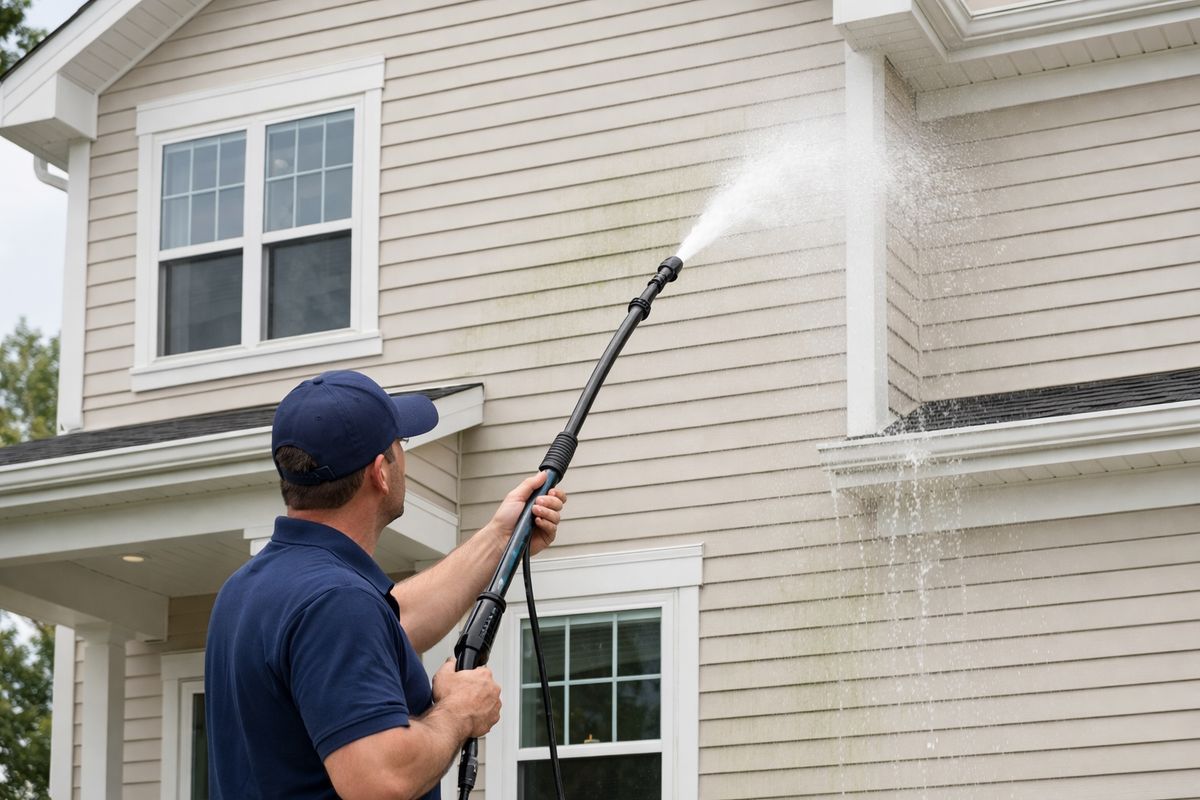
This part confuses a lot of people because “pressure washing” gets used as a catch-all phrase. In plain English, soft washing uses lower pressure plus cleaning solution to break down mold, algae, mildew, and grime. Pressure washing uses more force to blast buildup away.
More pressure is not better. That is the point worth remembering.
For many homes, especially siding and painted exteriors, soft washing is the safer method. In fact, soft washing has become the industry standard for many delicate exterior surfaces because high pressure can scar paint, force water behind panels, and shorten the life of materials that were never meant to be blasted. If you want a clearer breakdown of the methods, it helps to read about when low-pressure cleaning makes more sense.
Concrete, on the other hand, often handles higher pressure better than siding does. That is why one property may need both methods on the same visit. A good company matches the process to the surface instead of using one setting for everything like a car wash wand.
Prep and cleanup that may be part of the base service
Some of the best work happens before the water turns on. A careful crew may pre-wet landscaping, protect nearby plants, move light obstacles, and check for loose pieces of siding or trim. Those are small steps, but they tell you a lot about how the job will be handled.
After the cleaning, some companies rinse surrounding areas such as entry pads, door thresholds, and nearby splash zones. Some also do a final walkaround to make sure runoff did not leave dirty lines around the house. Others do none of that unless you ask.
That is why scope matters more than the label on the estimate. Two quotes can both say “house wash” and still describe very different jobs.
What’s Often Extra, Even If You Assumed It Was Included
This is where surprise charges usually show up. Plenty of surfaces sit right next to the house and still get quoted separately. If you have ever felt like you ordered the combo meal and somehow the drink still cost extra, this is that moment.
Gutter brightening and gutter interior cleaning
Gutters cause a lot of confusion because there are really two different services hiding under one word. Washing the outside face of the gutters means removing dirt, algae, and general discoloration from the visible exterior. Cleaning the inside means removing leaves, sludge, roof grit, and downspout clogs.
Those are not the same job, and they are often billed separately.
A house wash may include rinsing the outside of gutters if they sit within the cleaning path of the siding and trim. But “gutter brightening,” which targets the dark tiger-striping on the exterior, usually takes extra chemicals and extra time. Interior gutter cleaning is almost always its own line item because it involves debris removal, bagging, flushing, and checking flow.
Roof cleaning
Roof cleaning is usually a separate service for good reason. Roofing materials need a different cleaning approach, different safety setup, and much more caution. Asphalt shingles, in particular, should not be treated like concrete or brick.
Most roof washes rely on soft washing and controlled chemical treatment to kill algae and loosen staining. That process takes more than a quick spray from the ground. It also carries higher liability because of height, footing, runoff control, and the risk of damage if the wrong method is used. That is why roof cleaning almost always has its own pricing.
Driveways, sidewalks, patios, and pool decks
Concrete is one of the most common extras. Even though the driveway touches the garage and the sidewalk leads right to your front door, those surfaces are often not included in a house washing service quote unless stated clearly.
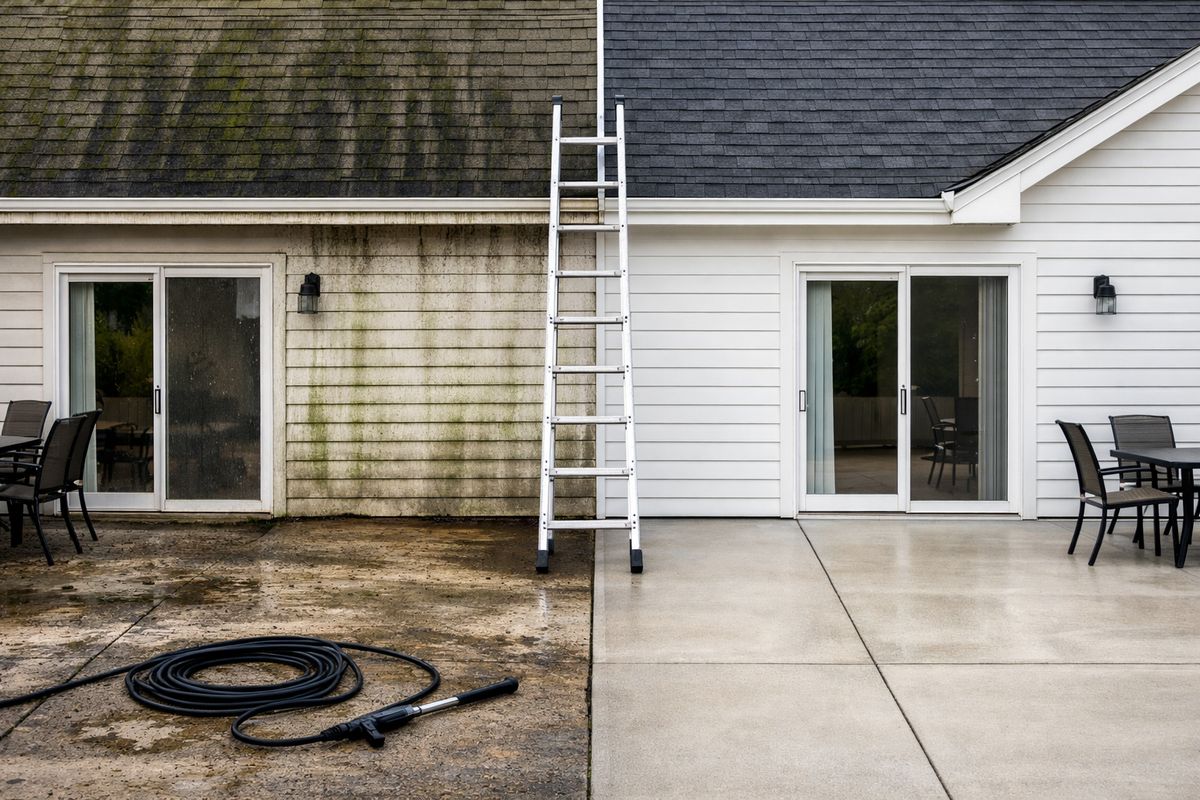
That makes sense once you think about the work involved. Concrete cleaning often needs higher pressure, more time, and sometimes pretreatment for oil spots, algae, or red clay staining. If you are trying to judge whether a quote is complete, compare it against what pros usually include for concrete surfaces. A clean house next to a streaky driveway can make the house look better, but it can also make the remaining dirt stand out more.
Decks, fences, and porches
Decks, fences, and porch surfaces are commonly quoted separately because the material matters so much. Wood can fur up or splinter if it gets too much pressure. Composite boards can streak if the nozzle angle is wrong. Painted porches may need a lighter touch than bare lumber.
Because of that, companies often treat these areas as separate work zones instead of automatic add-ons. It protects the surface, and honestly, it protects you from paying for the wrong method. If a crew includes deck washing in a basic house wash without even asking what the deck is made of, that is not a good sign.
Window cleaning, screens, and spot-free finishing
A house wash often rinses the windows. That does not mean you are getting full window cleaning.
There is a big difference between overspray rinsing and detailed glass cleaning. True window cleaning may include scrubbing glass, cleaning frames, washing screens, and drying for a spot-free finish. Those steps take extra tools and extra time, so they are often optional add-ons. Research even shows window cleaning was bundled in only a minority of residential jobs, which lines up with what you see in real quotes.
If sparkling glass matters, ask for it directly. “Windows included” is one of the most misunderstood phrases in exterior cleaning.
Why the Scope Varies So Much From One Company to the Next
Two companies can quote the same home, use almost the same wording, and still deliver very different results. That is not always shady. Sometimes the house itself is what creates the difference.
Surface type changes the method
Vinyl, brick, stucco, painted wood, Hardie board, and composite materials do not clean the same way. Some tolerate more pressure. Some need specialty detergents. Some can be damaged by aggressive rinsing even if the surface looks sturdy from the street.
Stucco is a good example. It looks tough, but it can hold water and show damage if cleaned too aggressively. Painted wood can peel if the pressure is too high or if existing paint is already loose. Vinyl is forgiving in some ways, but water can still get forced behind panels if the angle is wrong. If your home has vinyl, it helps to understand how siding can be cleaned safely.
This is why experienced crews ask what your home is made of before quoting the job. The material changes the method, the labor, the risk, and sometimes what they are even willing to include in the base service.
Home size, height, and access affect the quote
Square footage matters, but access matters just as much. A one-story ranch on flat ground is a different job from a tall two-story home with a fenced backyard, narrow side yard, and landscaping packed around the foundation.
Height increases time, setup, and safety needs. Angi’s pricing data shows three-story homes typically cost much more to wash than one-story homes for exactly that reason. Tight access, steep grades, locked gates, delicate shrubs, and outdoor furniture all slow the job down.
The catch is that a quick online quote rarely captures those details. A price that sounds great by text message can change once the crew sees the property in person.
Local conditions matter in places like Clarksville
Clarksville homes deal with their own mix of grime. Middle Tennessee humidity feeds algae and mildew. Spring pollen coats horizontal surfaces and sticks to siding. Red clay splash can stain lower walls near beds and downspouts. After a storm, you may also be dealing with mud, leaf debris, and water lines.
Those local factors change what “normal dirt” looks like. A light annual maintenance wash is one thing. A post-storm cleanup on a shaded north side is another. In this area, soft washing in Clarksville is often the better fit for siding because the issue is usually organic buildup, not just dust.
What a House Washing Service Does Not Always Cover
This is the section to read if you want to avoid disappointment. Cleaning can do a lot, but it cannot solve every exterior problem.
Stain removal beyond normal dirt and mildew
Normal dirt, pollen, algae, and mildew usually fall within standard house washing. Rust stains, oil spots, artillery fungus, oxidation, hard water marks, and deeply set organic staining often do not.
Those stains need specialty treatment, sometimes multiple applications, and sometimes realistic expectations. Rust from irrigation, for example, may lighten but not disappear completely. Oxidation on older vinyl can leave chalky runoff and may require restoration-style work rather than normal washing.
If a stain has been baking into the surface for years, ask whether treatment is included and whether full removal is even possible. Good companies will answer that plainly instead of promising miracles.
Paint prep, oxidation correction, and restoration work
Cleaning is not restoration. That line matters.
If your goal is to prep for painting or staining, the wash may need to go beyond a cosmetic clean. Mildew treatment may need longer dwell time. Oxidized siding may need extra correction. Peeling areas may require hand work, not just washing. Contractors prepping a surface for paint usually need a more exact result than homeowners who just want the house to look fresher from the curb.
That is why paint-prep washing should be discussed as its own scope. If your project includes painting next, it is smart to look at what a fuller exterior cleaning service normally covers before comparing bids.
Repairs, hand scrubbing, and specialty treatments
A house wash does not usually include repair work. Loose siding, rotten trim, failing caulk, insect nests tucked under eaves, damaged window seals, and unstable fixtures are all outside the normal scope.
Hand scrubbing is another common surprise. If one stubborn area around a chimney or behind a gutter apron needs detailed work, that may cost more because it is slower than the rest of the job. Specialty treatments such as sealing, rust neutralizing, or brightening heavily stained gutters also tend to be separate.
How Pricing Usually Works
Pricing for a house washing service is usually based on a mix of house size, surface type, labor difficulty, and scope. It is not just about square footage, and it is definitely not just about how long the job takes.
Typical price ranges for house washing
Nationally, the average cost to pressure wash a house is about $311 overall, with a broad range from roughly $100 to $703 depending on home size and job complexity. That spread is wide because “house washing” is wide. A small one-story home with light buildup is a very different project from a tall home with difficult access and years of mildew.
Story count can move the number fast. One-story homes often land in the lower ranges, while two-story and three-story homes climb because the labor and setup are harder. Another industry snapshot puts standard house wash appointments in the $250-$500 range, which is a useful middle-ground expectation for many typical homes.
Common add-on price ranges
Add-ons tend to be easier to ballpark. Driveways often run about $100 to $250. Patios commonly fall around $100 to $200. Fences often land between $150 and $300. Gutter-related work may add $50 to $150 depending on whether that means exterior washing, interior cleanout, or both. Roof cleaning often starts much higher, commonly around $450 to $700.
Those numbers are not promises, but they are useful guardrails. If you want more context around how charges stack up, it helps to compare them with what homeowners usually end up paying. The point is not to memorize every range. The point is to know when a quote is wildly off or suspiciously incomplete.
When a low quote is actually a red flag
A very cheap quote can mean one of three things: the scope is tiny, the job will be rushed, or the operator is cutting corners somewhere you cannot see. Maybe there is no insurance. Maybe the method is wrong for your surfaces. Maybe half the work you assumed was included is not included at all.
The industry is crowded with small operators, and price competition is real. But even industry commentary aimed at contractors warns against competing on price alone because quality and professionalism matter more in the long run. If one quote comes in dramatically lower than the others, read the exclusions twice.
Questions to Ask Before You Book
This is the practical part. A few direct questions can save you from most of the common misunderstandings.
“What exactly is included in this house washing service?”
Ask for line-by-line scope. You want to know whether the quote covers siding, trim, soffits, fascia, the outside face of gutters, entry areas, and nearby rinse-down. If windows are mentioned, ask whether that means rinsed or actually cleaned.
The more specific the answer, the better. Vague phrases like “full exterior wash” sound nice but do not tell you much.
“What method will you use on my home?”
Ask whether the home will be soft washed, pressure washed, or cleaned with a combination depending on the surface. Then ask why that method fits your materials.
That second question matters. Anyone can name a method. A good answer explains the surface and the reason behind the choice.
“What is excluded or billed separately?”
Ask directly about roof cleaning, gutters, concrete, patios, fences, decks, window cleaning, stain treatment, oxidation removal, and sealing. This is the best way to avoid the “wait, that costs extra?” moment on appointment day.
If your goal is curb appeal before photos or showings, ask which extras make the biggest visual difference first. That usually gives you a smarter quote and a better result.
“Are you insured, and do you handle plants and runoff safely?”
Insurance matters. So does plant protection and runoff control.
You want to hear that landscaping will be pre-wet or protected, detergents are handled carefully, and surrounding surfaces will be respected. If an older painted home may involve lead concerns, the EPA also requires wastewater containment and proper control measures during covered work. Even when lead rules do not apply, safe runoff handling is still a good sign that the company is paying attention.
How to Compare Quotes Without Getting Lost in the Fine Print
Comparing quotes gets easier once you stop looking at the total first. Start with what each quote actually includes.
Compare scope before price
A higher quote can be the better value if it includes gutters, soffits, plant protection, and detailed prep that the cheaper quote skips. Apples to apples is the goal. If one quote includes only siding and another includes siding, trim, soffits, and entry rinsing, those are not the same job.
Write each scope out side by side if you need to. It sounds old-school, but it works.
Look for photos, process, and communication
Before-and-after photos help. Written estimates help more. Clear explanation of methods, timing, and prep is a strong signal that the company knows exactly what it is selling.
Fast communication matters too. Not because a quick text response makes a surface cleaner, but because vague communication before the job often turns into vague accountability after the job.
Check for surface knowledge, not just equipment
Bigger machines do not equal better work. Surface knowledge matters more than horsepower. A skilled operator knows when not to blast a surface, when to change chemical strength, and when a stain needs a different approach.
That is especially true on siding, painted trim, wood, and roofs. The best crews sound less impressed with pressure and more focused on method.

Best Options by Property Type and Goal
Not every buyer is hiring for the same reason. Your best choice depends on what you are trying to accomplish.
If you’re cleaning before listing a home
Before listing, focus on the surfaces that change first impressions fast: siding, trim, front walk, porch area, and the driveway if the budget allows. Photos pick up grime more than you think, especially around garage doors and shaded corners.
Speed matters here too. You want a crew that can turn the job around quickly and leave the property photo-ready without a lot of back-and-forth. If curb appeal is the priority, it helps to think through which exterior cleaning updates show up most visibly.
If you manage a commercial property
Commercial needs are a little different. Storefront glass, sidewalks, dumpster pads, loading areas, breezeways, and entry points matter because traffic is constant and dirt comes back fast. Scheduling matters more too, especially if tenants or customers need uninterrupted access.
For commercial properties, recurring service often makes more sense than one-off cleaning. A reliable schedule usually costs less over time than waiting until buildup gets severe.
If you’re prepping for painting or staining
Paint prep washing should be treated as a prep service, not just a beauty treatment. You may need heavier mildew treatment, extra rinse time, and enough drying time before primer or stain goes on.
This is where a cheap cosmetic wash can backfire. If the surface still has chalk, mildew, or embedded grime, paint will tell on it later.
Common Mistakes That Lead to Surprise Charges or Disappointing Results
Most bad experiences come from assumptions, not just bad crews. A few common mistakes account for a lot of frustration.
Assuming “house wash” means everything outside
It sounds like an all-in phrase, but it usually is not. House wash often means the exterior walls and related trim, not every outdoor surface on the property.
That phrase is broader than the service itself. Like ordering a breakfast plate and finding out the coffee was separate.
Choosing based on price alone
The cheapest quote can become the most expensive if surfaces are missed, damaged, or left dirty enough that you need another company to redo the work. A slightly higher quote from a careful, insured company often saves money because the result lasts longer and the scope is clearer.
Forgetting to ask about follow-up maintenance
In humid areas, clean surfaces do not stay clean forever. Pollen comes back. Mildew comes back. Shaded walls and north-facing sections usually show it first.
Many homes in Tennessee benefit from regular washing every year or so, and some need it more often depending on trees, moisture, and exposure. Asking about maintenance timing now can help you avoid another heavy cleanup later.
A Simple House Washing Service Checklist You Can Use
If you are calling or texting for estimates this afternoon, keep it simple. You do not need a script. You just need a short list that helps you compare the answers.
What to confirm before the appointment
Confirm the exact surfaces being cleaned, access points, water source, gate access, pets, outdoor furniture, delicate plants, and weather timing. If anything blocks the work area, mention it early. The more the crew knows beforehand, the more accurate the quote and the smoother the visit.
Also confirm arrival window and whether you need to be home. Some services can be done while you are away, but only if scope, access, and payment are already clear.
What to verify on the final quote
Make sure the quote shows the service method, included surfaces, excluded surfaces, add-ons, estimated completion time, and payment terms. If gutters, windows, concrete, deck surfaces, or roof areas are not listed, do not assume they are tucked in somewhere.
A clean quote should be easy to compare side by side. If it is vague, that is useful information too.
Frequently Asked Questions
How often should you book a house washing service?
For many homes, once a year is a solid baseline. In humid areas like Clarksville, homes with shade, heavy pollen, or frequent algae growth may need cleaning every 12 to 18 months, sometimes sooner if buildup returns quickly.
Is house washing safe for vinyl siding?
Yes, if the method matches the surface. Vinyl is usually best cleaned with soft washing or low-pressure washing that removes grime without forcing water behind panels or damaging the finish.
Does a house wash include the driveway and patio?
Usually not unless the quote says so. Concrete cleaning is often a separate service because it uses different pressure, labor, and stain treatment than siding or trim.
Will house washing remove all stains?
No. Ordinary dirt, pollen, mildew, and algae usually respond well. Rust, oxidation, oil, artillery fungus, and hard water staining may need specialty treatment, and some stains may only improve rather than disappear.
How long does a house washing service take?
A straightforward job on an average home may take a couple of hours, while larger homes or jobs with multiple add-ons can take much longer. Height, access, buildup level, and the number of surfaces being cleaned all affect timing.
What matters most when choosing a company?
Clear scope, the right cleaning method for your surfaces, insurance, careful plant and runoff handling, and good communication. Start there, then compare price.
Once you understand what is truly included, booking gets much easier. Try one thing before you schedule: ask every company to spell out, in writing, exactly which surfaces are included and which are extra. That single step cuts through most of the confusion fast.